Looking at Axonius alternatives? Start with the question your asset inventory can't answer.
Axonius lists assets. JupiterOne reveals how they connect, exposing cloud, identity, and device risks, with vulnerability management and controls monitoring built in.









Why a large E-comm enterprise switched to JupiterOne

A large e-commerce enterprise replaced its incumbent asset management platform with JupiterOne this year consolidating asset management and vulnerability management into one platform
After being quoted as a separate product for exposure management. Deployment to enterprise-wide cutover in under five months.
One platform, one price
Security teams are consolidating, not adding tools. JupiterOne combines Cyber Asset Management, Exposure Management, and Continuous Controls Monitoring in one platform, under one contract. Before renewing, ask if exposure management is included or sold separately.
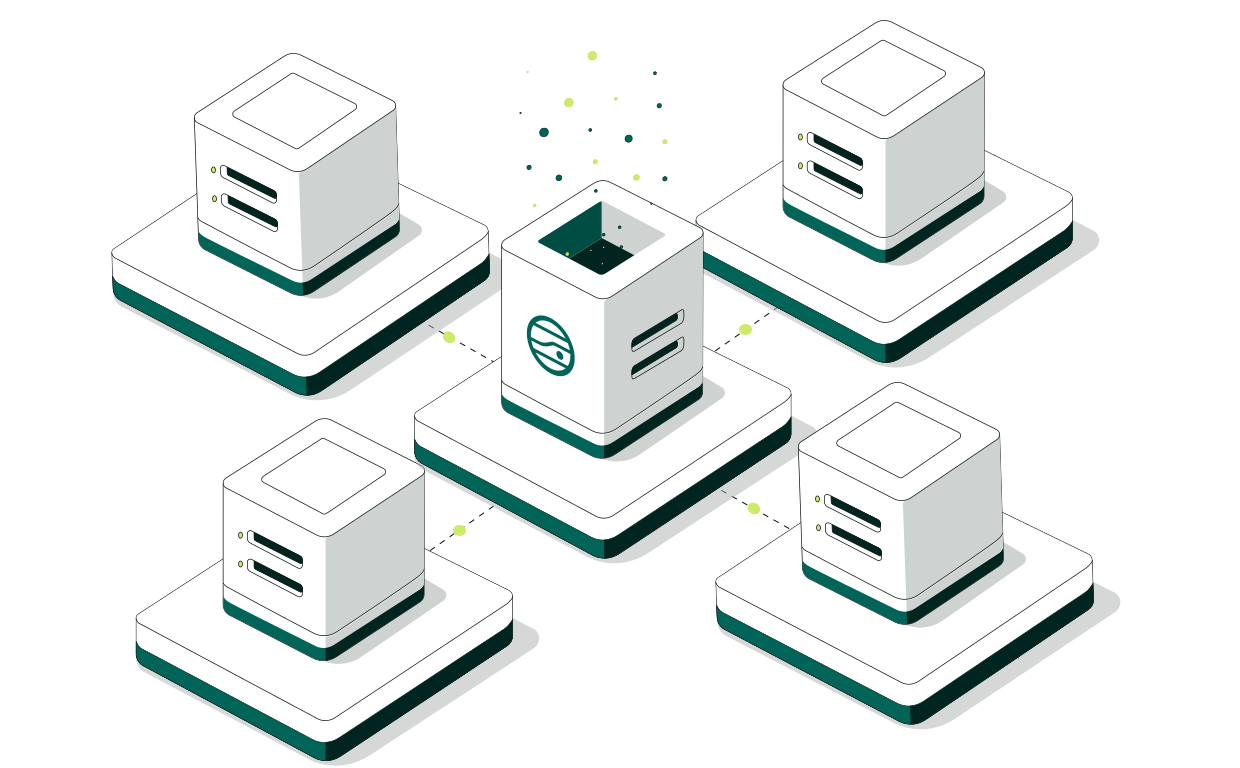
The difference is architecture, not features
Four questions to ask in any CAASM evaluation
If the answer is no, you have an inventory not asset intelligence.
Can it show which cloud workloads have privileged access to your most sensitive data — in one query?
When an identity is compromised, can it show the blast radius?
When it flags an unmanaged asset, can it tell you what that asset connects to and can reach?
Can you write security controls once and have them evaluated continuously against live data?
I go from manually building and tuning J1QL queries to simply asking for what I need in natural language. Dashboards that used to take hours now come together in minutes, making our security more efficient and productive.
The seamless integration of Claude and the MCP server has made it a breeze to navigate our asset graph, dissect intricate relationships, and pinpoint the exact data we need, be it compliance (e.g., CIS) mappings, endpoint coverage, or IAM drift.
This turned into a “once you use it, you can’t go back” moment for me.

Will Gregorian | Operator-first IT & Security
Galileo Medical
Answers, in plain English.
These are the most common questions about how we compare.
Can’t find what you’re looking for?
Send us an e-mail
Is JupiterOne an Axonius alternative?
Yes. Both platforms aggregate and deduplicate asset data. JupiterOne differs in architecture: it stores assets as a graph with typed relationships, which supports blast-radius analysis, attack path queries, and continuous controls monitoring — and includes vulnerability management in the platform price.
How is JupiterOne priced?
One platform, one contract. Asset management, Vulnerability & Exposure Management, and Continuous Controls Monitoring are included not a separate SKU.
How long does migration take?
Most integrations connect in hours. A typical evaluation-to-cutover runs 30–90 days with a parallel-run period. Recent enterprise replacements completed in under five months from first conversation to enterprise-wide cutover.
Does JupiterOne integrate with my existing tools?
200+ native integrations across cloud providers, identity, endpoint, code repositories, and scanners — the data sources you already have become the graph.
Switching is a project
plan, not a leap
Our switching kit maps your existing integrations to JupiterOne's 200+ integrations, with a 30-day parallel-run plan so nothing goes dark during cutover. Most teams run both platforms side by side and let the query results make the decision.