Prove your controls work. Every day. Not just at audit time.
JupiterOne CCM gives security and DevOps teams continuous cybersecurity signals from every control they own. Define a control. Author the test. Get alerted the moment it drifts across every framework you have to satisfy.
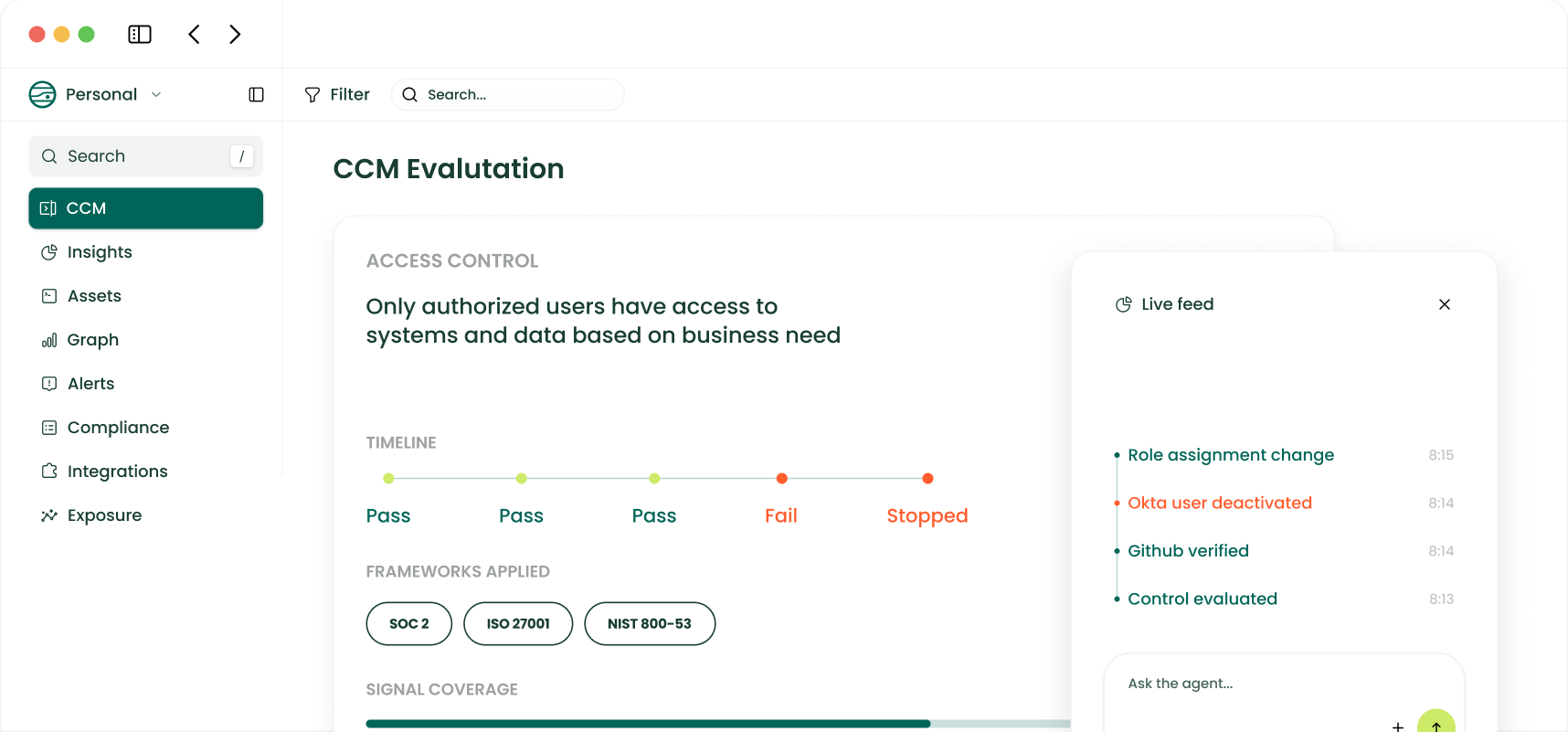









Documentation of intent is not proof of control.
Most compliance programs prove that policies exist, not that controls are actually working. GRC platforms collect documents. Compliance automation tools check boxes against pre-built integrations. Neither tells your security team when a control drifts in production or gives your DevOps team a signal they can route into their existing workflows.
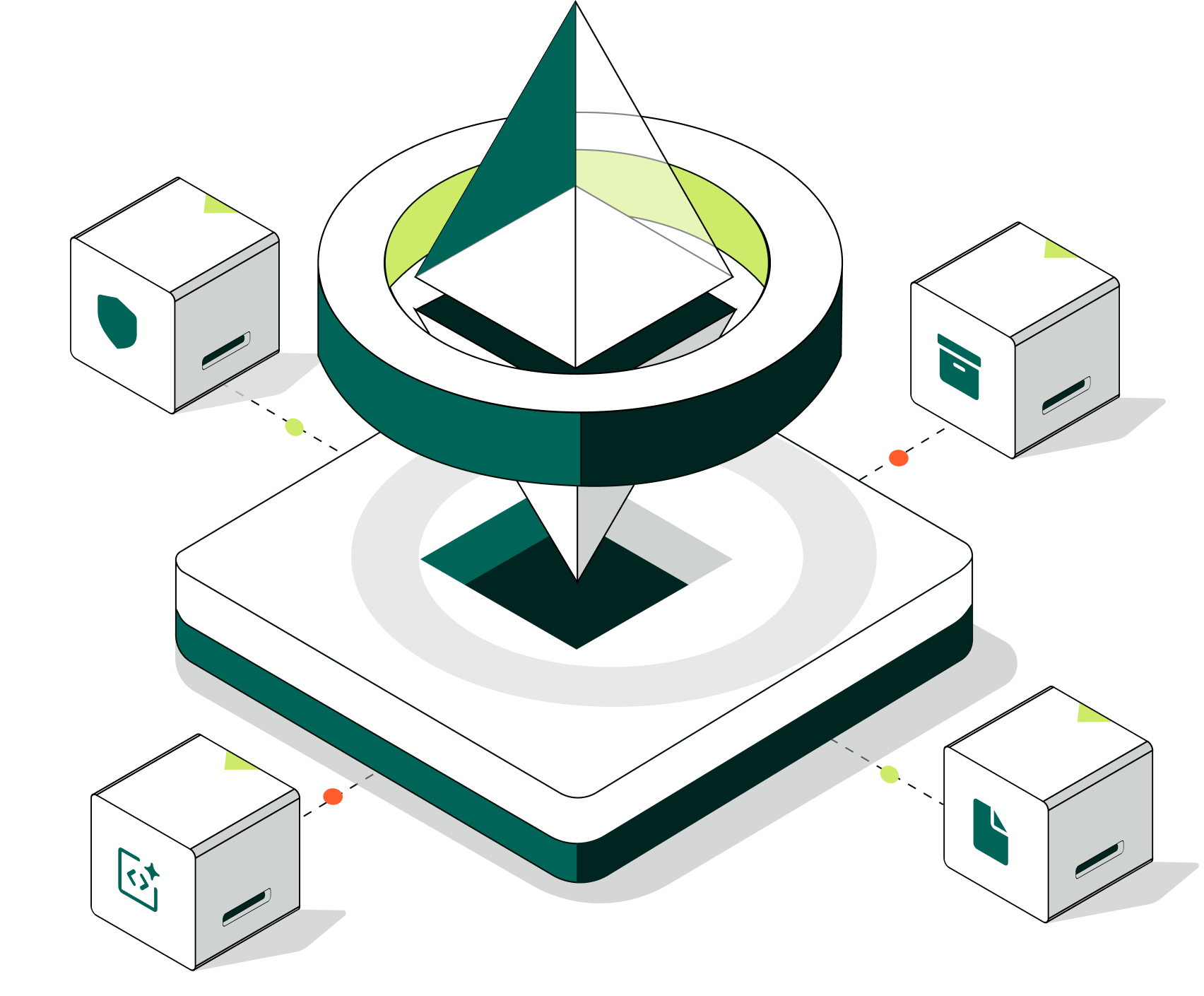
Built for security squads in regulated industries.
JupiterOne CCM is built for mature organizations with existing security frameworks and internal security squads who need automated control validation across the systems they actually own. We see strongest fit in financial services, insurance, healthcare, and fintech — and in any organization where a CISO has to defend a control posture to a board, an auditor, or a regulator.
01.
Financial Services
Continuous control validation for the security and DevOps squads inside global banks, asset managers, and fintechs. DORA, SOC 2, and PCI DSS are satisfied as a byproduct not the headline.
02.
Insurance
Audit-ready evidence for cyber-insurance attestations, NAIC, and group-level oversight without pulling your security engineers into manual evidence collection.
03.
Healthcare and Fintech
HIPAA, SOC 2, and ISO at the speed of the engineering teams who own the systems with control alerting routed into the workflows you already use.
The four pillars of cybersecurity
SEE JUPITERONE CCM
Cybersecurity signals from every control you run.
Every control test becomes a continuous signal. Drift is detected the moment it happens. Alerts route to the workflows your security and DevOps teams already use Slack, Jira, PagerDuty, ServiceNow. Stop chasing evidence at audit time; start operating on signal.
PROOF
Prove the control. Not just the policy.
GRC platforms collect evidence that a policy exists. JupiterOne CCM evaluates whether the technical control is actually operating. Control tests run continuously and are integration-aware, so they only execute where the relevant data is available.
PROOF
Built for the security squads, not just the GRC team.
Senior security analysts and DevOps engineers can author control tests directly in a guided UI, with JupiterOne AI assistance, or in raw J1QL when they need precision. Controls move through Draft → Review → Live → Retired with a full audit trail.
PROOF
Map controls once. Satisfy every framework.
JupiterOne CCM uses a many-to-many control-to-framework mapping. Define a control once. The same control can satisfy SOC 2, ISO 27001/27002, NIST 800-53, CIS v8, DORA, and your internal policies simultaneously. No duplicated evidence collection per framework. No rewriting controls when the next regulation arrives.
PROOF
Mapped to the frameworks you have to satisfy.
SOC 2, ISO 27001/27002, NIST 800-53, CIS v8, HIPAA, DORA, NIS2 and any custom or regional framework you extend with J1QL.




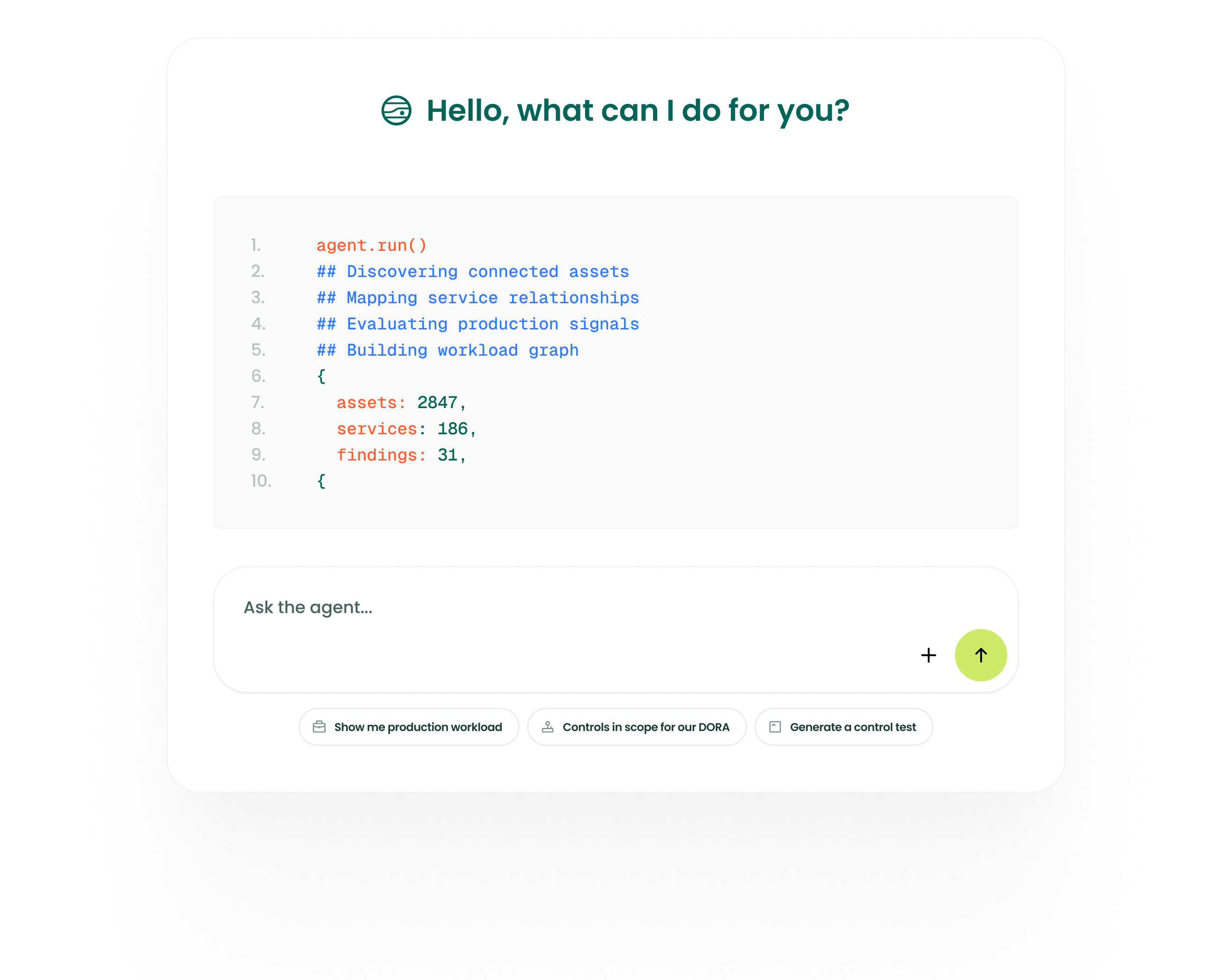
Ask any control question. Get the signal in seconds.
JupiterOne AI translates plain-English questions into J1QL, runs them against your asset graph, and returns the evidence. Security engineers and DevOps teams author control tests directly no engineer-translator in the loop.
Asset lists vs. an asset graph.
Most asset tools aggregate. JupiterOne connects.
How CCM shows up for your team.
Built for the way modern businesses actually work cloud, SaaS, identity, and AI.
Answers, in plain English.
These are the most common questions about CCM.
Can’t find what you’re looking for?
Send us an e-mail
What is Continuous Controls Monitoring (CCM)?
CCM is the practice of evaluating whether security and compliance controls are operating effectively on an ongoing basis, against live technical data rather than at point-in-time audit cycles. Gartner defines CCM as a discipline distinct from traditional GRC and from compliance automation tools.
Is JupiterOne CCM for compliance teams or security teams?
Both but the day-to-day champions are typically the security engineers and DevOps security teams who own the systems being evaluated. CISOs sponsor the program. Compliance Managers use the Framework Compliance View. Security engineers author the control tests in J1QL or with JupiterOne AI, and route the resulting signals into their existing incident workflows. The platform is built to span those audiences without forcing them into one another's tooling.
What's the difference between a control and a control test?
A Control documents what your organization does to satisfy a requirement — for example, "AWS IAM policies enforce MFA for all console access." A Control Test is the J1QL query (or manual attestation) that validates the control is operating — for example, "FIND aws_iam_user WITH mfaEnabled != true." Controls are defined in a guided UI with lifecycle states, owners, and remediation guidance; control tests are authored in J1QL or generated with JupiterOne AI.
How does JupiterOne CCM fit with DORA, NIS2, and the SEC cyber-disclosure rule?
DORA, NIS2, and SEC cyber disclosure all require organizations to evidence ongoing control effectiveness not just point-in-time policy documentation. JupiterOne CCM is mapped to these frameworks out of the gate, with shared controls across SOC 2, ISO, NIST, and the new regulatory regimes. The frameworks are a complementary outcome of running CCM well — not the reason to buy it.
How is JupiterOne CCM different from Drata or Vanta?
Drata, Vanta, and Secureframe automate evidence collection for predefined SOC 2 and ISO controls, primarily through checkbox-style integrations. JupiterOne CCM evaluates control tests by querying live technical configuration in your environment including custom control tests expressed in J1QL. The result: deeper technical evidence, broader framework support, alerting routed into your existing security workflows, and controls that match how your environment actually operates.
How is JupiterOne CCM different from a GRC platform like Archer or ServiceNow?
GRC platforms are built for risk management workflows and policy documentation. They depend on humans attaching evidence to control records. JupiterOne CCM evaluates whether the control is technically operating right now, continuously, by querying live data. It augments GRC for the technical-controls portion of a program and adds direct IRM read/publish integration.
What frameworks does JupiterOne CCM support?
SOC 2, ISO 27001/27002, NIST 800-53, NIST CSF, CIS v8, HIPAA, DORA, and NIS2 and customers extend coverage to internal and regional frameworks with custom controls and control tests in J1QL. Because controls are defined once with many-to-many framework mapping, a single control can satisfy multiple frameworks simultaneously.
Do I need JupiterOne Platform to use CCM?
CCM runs on the same asset graph that powers asset visibility. Customers who already use JupiterOne for asset visibility get CCM as a natural extension on top of their existing data.
How quickly can we see value?
Most customers see their first control tests evaluated within days of connecting their primary integrations. Initial framework coverage typically lands within the first month. Audit-cycle impact is realized within the next audit window.
See how JupiterOne CCM works.
DORA, NIS2, and the SEC cyber-disclosure rule make this conversation urgent but they're not the value. The value is the control signal your security team can act on every day, well before any regulator asks.